![b8418dc3-0886-4e57-a609-b76b4a600d63.png]](https://help.ratiocoffee.com/hs-fs/hubfs/b8418dc3-0886-4e57-a609-b76b4a600d63.png?height=42&name=b8418dc3-0886-4e57-a609-b76b4a600d63.png)
Introduction
Have you noticed how changing your grind size affects the flavor of your morning coffee? Grind size is an important variable in achieving an extraction that matches your taste preferences. If the grind is too coarse or too fine, it can negatively impact both the brewing process and the final cup. In this article, we'll cover the basics of grind size to help you understand how it influences extraction and how you can use it to your advantage.

Changing your Grind is a Macro-adjustment
What do we mean by a "macro-adjustment"? We mean that a small change in the grind size will noticeably impact the outcome of the brewed coffee. This is why making small changes between brews, rather than drastic changes, to the grind setting will help you get to the ideal extraction more effectively. Changing the grind size, or the setting on your coffee grinder, will modify the solubility of your coffee when adding water to extract "the goods". At a molecular level, the hot water is helping pull out coffee molecules and oils. The water will remove more of these molecules from finer coffee grounds, and less from coarser coffee grounds. Each kind of brew method will use a different grind setting because of how the water is used to influence extraction.
Where do I start?
Ratio recommends using a medium-coarse grind size for our coffee makers!
All grinders have a different range and different burrs, therefore, this may take some practice to dial in your routine. A grind size between 'pour over' and 'French press' is a good range to start within for brewing coffee on your Ratio. Try referring to the grinder's operation manual for a specific grind setting or range.
Dialing in: Under-extraction vs. Over-extraction
Your taste buds are the most important tools to help move your brew's extraction in the right direction. Ideally, the coffee will taste sweet, balanced, transparent, and have a full mouthfeel to highlight the best qualities of the coffee you're brewing. Below, you will get to understand the qualities of under-extraction and over-extraction, and how grind size can be used to improve your brew:
-
Under-extraction may present weak, salty, sour, and/or having a quick finish. To help resolve under-extraction, make the grind size finer, which will boost extraction.
-
Over-extraction may present dry, harsh on the tongue, and/or hollow in flavor. To help resolve over-extraction, make the grind size coarser, which will lessen extraction.
Having one go-to grind size, when switching up the type of coffee you're brewing, is a great way to have a simple starting-point before changing the grind.
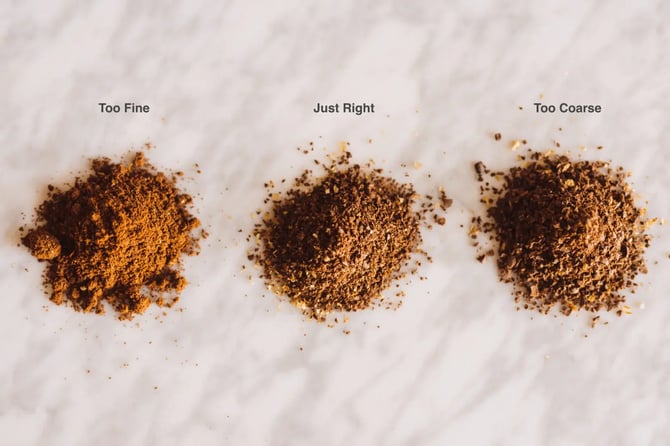
Overflow
Grind size affects more than just the flavor of your coffee, it also determines how water flows through the coffee bed during brewing. This is especially important for pour-over methods, which rely on gravity to draw water through the grounds and filter.
If the coffee is ground too finely, water drains more slowly because the tightly packed particles restrict airflow and create greater resistance. In automatic pour-over brewers, this can lead to overflow, where the shower head dispenses water faster than it can pass through the coffee bed and filter. Choosing a coarser grind promotes proper drainage, helps maintain a consistent brew, and reduces the risk of overflow while still allowing for balanced extraction.
Can I Buy Pre-ground Coffee?
Yes, you can buy pre-ground coffee from a grocery store or ask your local cafe or roaster to grind a bag of whole beans for you. Some grocery stores even provide a coffee grinder, allowing you to grind the beans yourself before taking them home. While these options are convenient, pre-ground coffee does come with some limitations.
One drawback of grocery store pre-ground coffee is that it was likely roasted, processed, and ground long before it reached the shelf. Most grocery store bags display only an expiration date, making it difficult to determine when the coffee was actually roasted. Without a roast date, it's nearly impossible to judge how fresh the coffee is before buying. And let's be honest, fresh coffee is the best coffee!
Another limitation is the lack of flexibility. Once a bag has been ground, you can't adjust the grind size to suit your brewing method or improve your extraction. If the coffee is ground too fine or too coarse for your equipment, you're stuck with that grind for the entire bag, which can make it difficult to achieve the best possible results.
Freshly roasted coffee generally tastes best roughly between one and four weeks after roasting, when the beans still contain an ideal amount of carbon dioxide (CO₂). As coffee ages, that CO₂ gradually escapes, resulting in a flatter, less vibrant cup. Once coffee is ground, this process accelerates because of the increased surface area exposed to air. Coffee that has spent months on a grocery store shelf—especially if it's already ground—will often lack the aroma, sweetness, and complexity of freshly roasted beans. Over time, the coffee's oils can also oxidize and become rancid, producing stale or unpleasant flavors.
Summary
As we have learned, grind size is very important for a few reasons. Having the right grind size will help yield an ideal extraction and allow for the proper drainage. Having a coffee grinder will give you the advantage to change your grind size in case you need to mitigate under or over-extraction, and it will ensure freshness of the coffee when grinding whole beans right before brewing. A fine grind size for a pour-over, for example, can cause "overflow', which is an inconvenience to your morning. While you can purchase pre-ground coffee, it's not ideal when hoping for a fresh and vibrant cup. While other variables such as water temperature, water type, coffee dose, filter type, etc. can influence the extraction of your morning beverage, there are many reasons grind size is one to keep an eye on.
If you're having trouble figuring out the best grind for your Ratio, please don't hesitate to contact our dedicated CX team. Happy Brewing!